Overcoming The Fear of Putting Your Work Out There
But sometimes, our irrational fears limit us. We writers spend time, heart and brain space crafting our tales, usually with the intention of sharing them with the world. Committing that much of ourselves to something we’ve created and then holding it up for the world to see is terrifying. We are faced with potential rejection or apathy, and that can be soul-crushing. The fear of that experience can often keep us from putting our work out there at all. To put your work out there and actually receive rejection or apathy can convince us that it’s not worth it.
I've written several blog posts on writing over on our writers' group blog, some of which I'd like to share here as well. This one was originally posted on March 22, 2023.
We all have our irrational fears – clowns, alien abductions, zombies, the three little circles formed by the lenses of an iPhone (also known as trypophobia.) Even if we haven’t experienced actual trauma from irrational fears, they make us uncomfortable and this leads us to avoid them.
Perhaps we have good reasons for this – our peace of mind, for example. Zombies scare the crap out of me, though thankfully I’ve never actually encountered a real one. I know that a zombie movie or show will give me nightmares, so I avoid them like, you know, the plague. And I sleep better for it. Good strategy.
But sometimes, our irrational fears limit us. We writers spend time, heart and brain space crafting our tales, usually with the intention of sharing them with the world. Committing that much of ourselves to something we’ve created and then holding it up for the world to see is terrifying. We are faced with potential rejection or apathy, and that can be soul-crushing. The fear of that experience can often keep us from putting our work out there at all. To put your work out there and actually receive rejection or apathy can convince us that it’s not worth it.
It's important to remember, though, that opinions are subjective. Just because one publisher, or one audience, or one contest doesn’t accept your work, doesn’t mean your work sucks. Really! Often it comes down to a numbers game – how many submissions there were, and where your work falls in that hierarchy. It may even come down to something as little as a fraction of a point, or not enough space. That doesn’t mean your work was bad! It just means it didn’t fit this particular situation. It may not have fit one gatekeeper, but maybe it fits another. Knowing this gives us a little perspective.
I am irrationally terrified of rogue waves. I’ve had the same ship sinking nightmare since I was a young child. Anytime I see a film or show that involves a ship sinking I’ll have nightmares for a week – some new ones, but it also dredges up the same one from my youth. I can’t handle being on boats, big or small. They terrify me!
Recently, Meta shoved a reel of a ship in bad weather into my feed, and my first reaction was to swipe it away and avoid the fear. But I found myself actually watching it – the swell of the wave climbing higher and higher as the bow of the ship pitched steeply, holding my breath until the ship fell sharply and the wave crashed over it. I was transfixed, and horrified, and I braced for the inevitable nightmares.
But for the first time ever, they didn’t come. And because I watched that one reel, Meta keeps putting more and more wave footage into my feed. I watch them all in horror and awe from the safety of my couch, and I haven’t had a single ship-sinking nightmare. Mind you, I’ve no intention of getting on a boat if I can avoid it, but it got me thinking about that irrational fear and how just letting myself be open to it, instead of instantly rejecting it, has kept the nightmares at bay.
If we look at fear as entering a dark room, where giant shapes loom in the corners, we can only imagine them as monsters (or clowns?) that are waiting to get us. But what happens if we turn on a light? That thing we’re convinced is a giant beast is actually just an armoire, or a dresser or coat rack. If we spend a moment with our fears and examine them for what they really are, it can take away the bite. And maybe with enough practice, the discomfort.
So how do we apply this as writers to our fears of rejection and apathy? We turn on the light. We allow our minds to look at what we’re afraid of, sit with it, understand it, and then move into that room despite it. Here are some things to try:
EXPOSURE THERAPY
The more you put your work out there, the more opportunity you have for a win. If you can steel yourself to accept rejection as a part of the process and not as a personal affront, it makes it easier to keep submitting. As I said earlier, often it comes down to miniscule things that get your piece rejected, not the quality of it. Keep that in mind, and keep submitting.
SET YOURSELF UP FOR SUCCESS
You have a better shot at getting your work accepted if you take the time to understand what you’re submitting to. If it’s a contest, magazine, or anthology, follow the submission guidelines. That means understanding the formatting, story length, and theme/prompt/tone they are asking for. If it specifically says not to do something – don’t do it. You are not an exception, and that’s the quickest way to get rejected. Why set yourself up for that? It’s quite common that writers don’t get accepted simply because they’ve not done their homework on submitting. Be thorough, and you'll successfully jump through the first hoop!
CONSIDER ADVICE OR FEEDBACK
If you get specific feedback from a publisher, editor, or contest reviewer that seems like good advice, consider it. I’m not saying they’re always right when it comes to how you should tell your story – we could go utterly mad if we made every single change suggested and it didn’t jive with our original vision. (We writers have the option to reject things as well!) But keep an open mind when it comes to feedback – it’s not personal. It’s usually suggestions – often from professionals – to improve our work, and a good opportunity for us to learn to be better writers and how to get published. Keep an open mind and make choices that work best for the integrity of your story.
SELF PUBLISH
If you want to ensure you won’t get rejected by agents or publishers, become an independent author. What used to be considered a vanity option for writers is now a vast, booming industry, with countless success stories of authors who’ve either made it on their own or have been picked up by publishers and agents because of the following they have created for their body of work. Yes, you will still face some rejection and apathy as an indie author (trust me, haha). But you will have much more control and flexibility as a creative and you’ll be able to take things at your own pace and comfort level as you test the waters. (Perhaps that’s why those stormy sea videos don’t scare me as much as they used to – because I’ve stepped into scary waters. Who knows!)
If you feel like you’re ready to flick on the light and face the armoires and clowns and iPhone 11 camera lenses, here is a link with tons of upcoming opportunities for story submissions:
Go forth, fellow creatives, and put your work out there! And be reassured that someone, somewhere, at some point will connect with it. And that is worth the rejections that come before it!
What I've Learned In My First Year As A Published Author
Being a writer is a lot more work than most people think. (And if you don’t believe me, ask the folks protesting with the WGA right now!) The time, brainpower, creative inspiration and – yes – even physical exertion it takes to craft stories for others to enjoy is like the bulk of an iceberg, submerged in the ocean with only a tiny bit of it visible. When you read a book in a few days or binge watch a series, you’re experiencing the finished product in a super-condensed amount of time. But the hours, days, months and even years of drafts, rewrites, and edits are what make that book or series so bingeable.
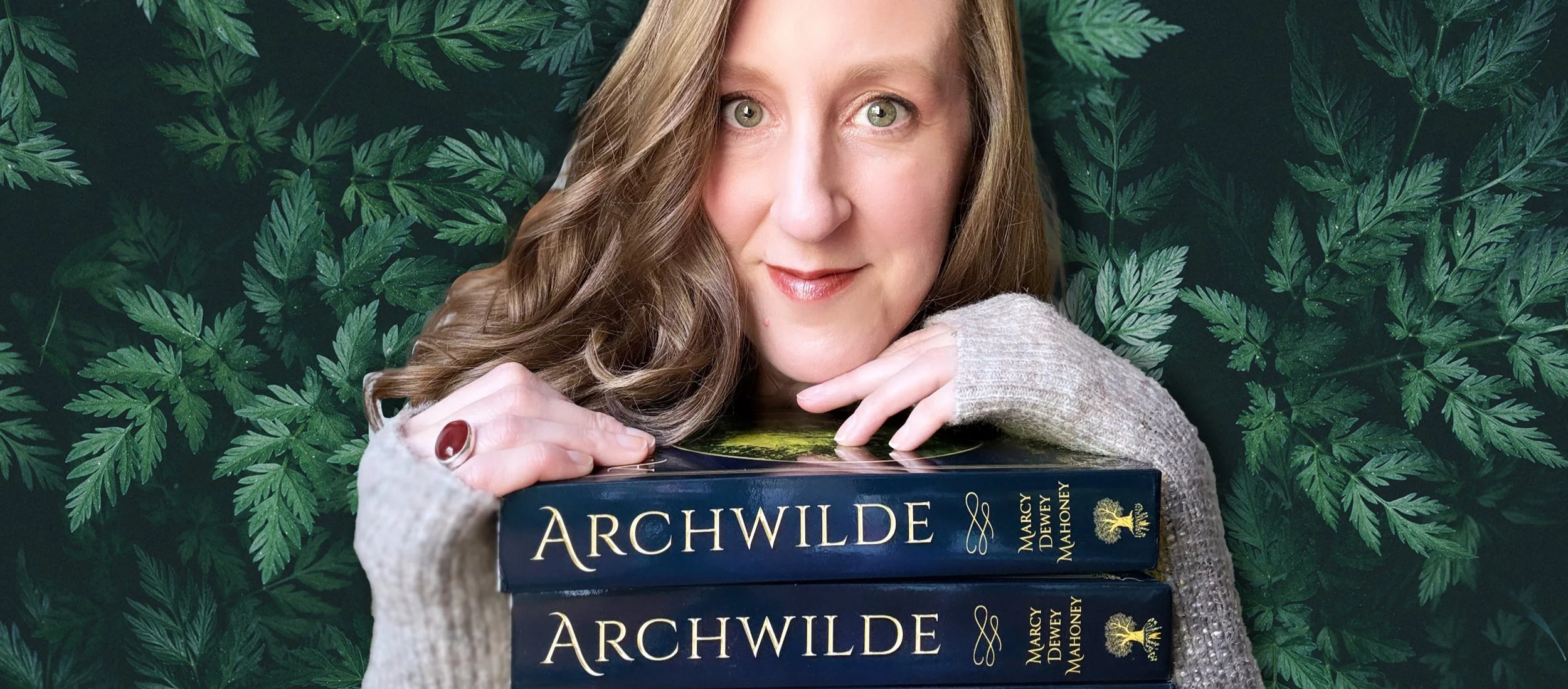
Today is Archwilde’s one-year-bookaversary, and I’ve been thinking about everything that I’ve learned in the year that’s gone by. (One of those things is the term “bookaversary,” haha - thanks Instagram!) I’ve learned a lot about publishing, marketing and growing my small business. I’ve also learned a lot about myself, my creative process, and my goals and boundaries.
Being a writer is a lot more work than most people think. (And if you don’t believe me, ask the folks protesting with the WGA right now!) The time, brainpower, creative inspiration and – yes – even physical exertion it takes to craft stories for others to enjoy is like the bulk of an iceberg, submerged in the ocean with only a tiny bit of it visible. When you read a book in a few days or binge watch a series, you’re experiencing the finished product in a super-condensed amount of time. But the hours, days, months and even years of drafts, rewrites, and edits are what make that book or series so bingeable.
When you couple the amount of creative work it already takes to be a writer with being independently published instead of traditionally, it’s a much bigger workload. Now you’re also handling all the marketing, sales, distribution, and public relations that a traditional publishing company would handle. Of course, you can hire others to do that for you but when you’re getting started as an indie author that can eat up your budget fast. It’s more important to hire a good editor (Thanks Elisabeth! ❤️) than a PR manager. If you’re careful about it, and you’re willing to learn and put in the work and time, you can do it yourself. It’s also important to manage your expectations and not get discouraged. It’s not likely you’ll be a bestseller out of the gate, even if you’re traditionally published. The publishing process is a marathon, not a sprint, and whatever forward motion you can make is still progress.
And sure, you could go through the query process and try to get picked up by a publishing house. A traditional publisher is still going to expect you to do marketing for your book, but you’ll be making far less royalties per copy with little creative control or say in the process. They also expect authors to already have a platform and a presence in the market by the time you query them. At this point in my career, I’d rather put in the work myself and be paid fairly for it.
Business aside, putting Archwilde out into the world has been incredibly transformational for me. People always tell you to “get outside of your comfort zone” to grow, and sure, there was an aspect of that with publishing my book – (these characters and this story are part of my soul, and now the whole world has a view to it, haha) – but this process has been far more powerful than just being “uncomfortable.” It’s been an evolution of something I started a long time ago.
I’ve always been a writer. It doesn’t matter that I wasn’t paid to be a writer, or I didn’t have the “professional writer” label. I’ve been practicing the craft of writing for over thirty years. It was never a hobby. It has always been my purpose. For a long, long time I thought I needed someone else to validate that for me; the only way I could call myself a “legit” writer was to climb some rickety ladder designed by some powers-that-be just so that some other entity can tell me I finally proved my creative worth.
But I’ve learned the only thing you need for verification is to just do the work. Tell your story, hone it, make it the story what it should be, then share it. It will resonate with someone at some point, which is the goal of course, but if you put the work in it will resonate with you. And in the meantime, keep writing. Because you’re a writer and you have more stories to tell.
So that’s what I did, and that’s what I’m going to continue to do. I spent years in other careers, putting in the work and dues and what-have-you, but I was always working on corporate things while my creative projects went unfulfilled. The burnout and chronic illness from that life was a wake-up call to stop giving everyone else my energy and put it into my own purpose. And I have to say, it’s been 100% worth the hard work and risks it took to step away from my old path and onto this one. Getting to share my stories and talk about them with readers is such incredible job satisfaction, and I am beyond grateful for it.
So, if you’ve read Archwilde, thank you. If you’ve dropped me a comment, DM, text, email or call, thank you. If you’ve left book reviews or shared one of my posts, thank you. If you’ve just thought about reading Archwilde but haven’t been able to yet, thank you. Even if you just bought that chonkin’ paperback in solidarity and are using it as a doorstop, thank you. Seriously – thank you for any and all of your support! And for those of you who’ve been around since before Archwilde was published and encouraged me to keep going, thank you
Thank you, all of you, from the bottom of my heart.
Archwilde’s a year old, and I am a year wiser. I’m changed, beautifully, for the better.
And I’m already writing the next chapter.
Sunshine Through The Brain Fog
Imagine you created a fictional world and everyone/everything in it, then rewrote parts of it slightly differently in each decade of your life, until your 40s where it all finally came together in (what you hope is) the book it was always supposed to be.
We're talking decades of inventing new characters, cutting old characters, new plot twists, deepening of storylines, building and re-building of the world and its cultures, character evolutions, name changes and so forth. There's so much world, so many people and through-lines and stakes, and it's all in tattered notebooks, various types of computer files and mostly, your head.
And then, just when it's all coming together, your brain decides "You know what? Stress and some health issues have kind of pushed me into a big-ass ball of 'nope.' So I'm gonna force you to slow your ass down with a little tune I like to call Fibromyalgia."