What I've Learned In My First Year As A Published Author
Being a writer is a lot more work than most people think. (And if you don’t believe me, ask the folks protesting with the WGA right now!) The time, brainpower, creative inspiration and – yes – even physical exertion it takes to craft stories for others to enjoy is like the bulk of an iceberg, submerged in the ocean with only a tiny bit of it visible. When you read a book in a few days or binge watch a series, you’re experiencing the finished product in a super-condensed amount of time. But the hours, days, months and even years of drafts, rewrites, and edits are what make that book or series so bingeable.
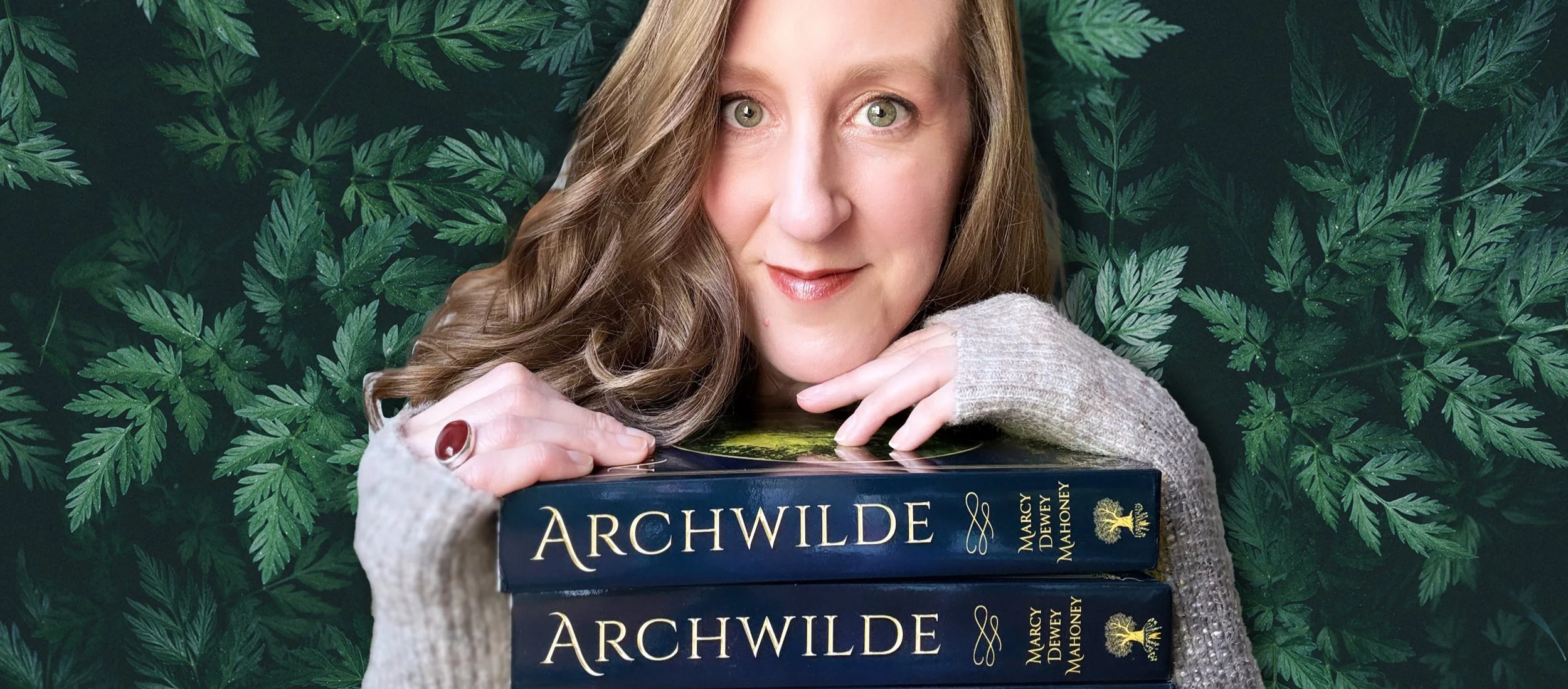
Today is Archwilde’s one-year-bookaversary, and I’ve been thinking about everything that I’ve learned in the year that’s gone by. (One of those things is the term “bookaversary,” haha - thanks Instagram!) I’ve learned a lot about publishing, marketing and growing my small business. I’ve also learned a lot about myself, my creative process, and my goals and boundaries.
Being a writer is a lot more work than most people think. (And if you don’t believe me, ask the folks protesting with the WGA right now!) The time, brainpower, creative inspiration and – yes – even physical exertion it takes to craft stories for others to enjoy is like the bulk of an iceberg, submerged in the ocean with only a tiny bit of it visible. When you read a book in a few days or binge watch a series, you’re experiencing the finished product in a super-condensed amount of time. But the hours, days, months and even years of drafts, rewrites, and edits are what make that book or series so bingeable.
When you couple the amount of creative work it already takes to be a writer with being independently published instead of traditionally, it’s a much bigger workload. Now you’re also handling all the marketing, sales, distribution, and public relations that a traditional publishing company would handle. Of course, you can hire others to do that for you but when you’re getting started as an indie author that can eat up your budget fast. It’s more important to hire a good editor (Thanks Elisabeth! ❤️) than a PR manager. If you’re careful about it, and you’re willing to learn and put in the work and time, you can do it yourself. It’s also important to manage your expectations and not get discouraged. It’s not likely you’ll be a bestseller out of the gate, even if you’re traditionally published. The publishing process is a marathon, not a sprint, and whatever forward motion you can make is still progress.
And sure, you could go through the query process and try to get picked up by a publishing house. A traditional publisher is still going to expect you to do marketing for your book, but you’ll be making far less royalties per copy with little creative control or say in the process. They also expect authors to already have a platform and a presence in the market by the time you query them. At this point in my career, I’d rather put in the work myself and be paid fairly for it.
Business aside, putting Archwilde out into the world has been incredibly transformational for me. People always tell you to “get outside of your comfort zone” to grow, and sure, there was an aspect of that with publishing my book – (these characters and this story are part of my soul, and now the whole world has a view to it, haha) – but this process has been far more powerful than just being “uncomfortable.” It’s been an evolution of something I started a long time ago.
I’ve always been a writer. It doesn’t matter that I wasn’t paid to be a writer, or I didn’t have the “professional writer” label. I’ve been practicing the craft of writing for over thirty years. It was never a hobby. It has always been my purpose. For a long, long time I thought I needed someone else to validate that for me; the only way I could call myself a “legit” writer was to climb some rickety ladder designed by some powers-that-be just so that some other entity can tell me I finally proved my creative worth.
But I’ve learned the only thing you need for verification is to just do the work. Tell your story, hone it, make it the story what it should be, then share it. It will resonate with someone at some point, which is the goal of course, but if you put the work in it will resonate with you. And in the meantime, keep writing. Because you’re a writer and you have more stories to tell.
So that’s what I did, and that’s what I’m going to continue to do. I spent years in other careers, putting in the work and dues and what-have-you, but I was always working on corporate things while my creative projects went unfulfilled. The burnout and chronic illness from that life was a wake-up call to stop giving everyone else my energy and put it into my own purpose. And I have to say, it’s been 100% worth the hard work and risks it took to step away from my old path and onto this one. Getting to share my stories and talk about them with readers is such incredible job satisfaction, and I am beyond grateful for it.
So, if you’ve read Archwilde, thank you. If you’ve dropped me a comment, DM, text, email or call, thank you. If you’ve left book reviews or shared one of my posts, thank you. If you’ve just thought about reading Archwilde but haven’t been able to yet, thank you. Even if you just bought that chonkin’ paperback in solidarity and are using it as a doorstop, thank you. Seriously – thank you for any and all of your support! And for those of you who’ve been around since before Archwilde was published and encouraged me to keep going, thank you
Thank you, all of you, from the bottom of my heart.
Archwilde’s a year old, and I am a year wiser. I’m changed, beautifully, for the better.
And I’m already writing the next chapter.
In Fantasy Novels like Archwilde, What's in a Name?
Here’s a question … when you read books, do you hear a character or place in your mind a certain way, only to find out that the author pronounces it completely differently?
Here’s a question … when you read books, do you hear a character or place in your mind a certain way, only to find out that the author pronounces it completely differently? I’ve had this problem many times in my life—the most notably was Star Wars: The Truce at Bakura by Kathy Tyers. I debated the pronunciation of Bakura with fellow Star Wars fans for years—well, years before the internet as we know it where we could look this stuff up, anyway. My western New York state accent read it as BACK-oora, but most others I knew pronounced it Ba-KOO-ra. (Interestingly, now that I’ve typed this, I’ve looked it up and it seems there is still confusion over the pronunciation of Bakura, even now, almost thirty years since it’s publication. So huh. The Internet does not know all!)
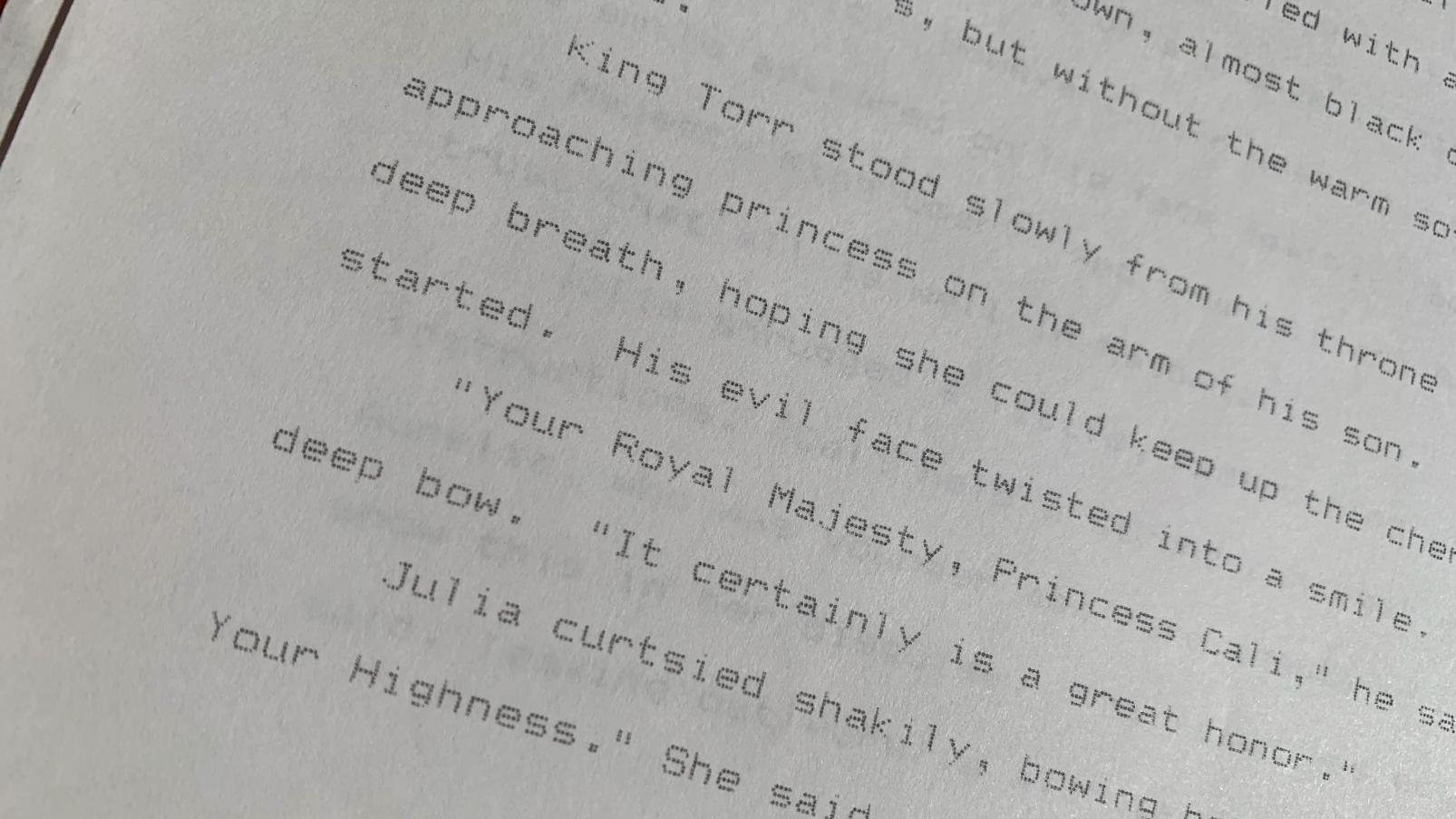
Anyway, that leads me to Azor Torr. When I’ve had discussions with beta readers of my book, everyone either asked me how I pronounce it, or just assumed it was AEY-zor (like the Azores region in Portugal). Once again, my western New York state accent wins out here—Azor’s name is pronounced: A-zor. (Like the “A” in “at” or “Apple.”)
How did I come up with the name Azor Torr in the first place? Well, keep in mind I wrote the very first draft of this book when I was 15 years old and knew little about storycraft, other than I liked stories and wanted to tell them. A lot of names in those early drafts came from looking around me and picking something in the room. For example, the name Kasdar came from the Empire Strikes Back poster on my bedroom wall. (By this point I’m sure you’re getting what a Star Wars nerd I was back in the day. Waaay before the prequels, waaay before Rey and Kylo and Mando.) I was sitting in my room, scribbling my story in my notebook and realized I needed a name for the country that neighbored Asyeran. I looked around and saw Lawrence Kasdan’s name on the poster and boom—the country was called Kasdan. Years later I decided it was too on the nose and changed the last letter to an “r.” I know, huge change, but it worked. Of course, now every time I have to write the word “Kasdarians” my brain reads it as “Kardashians,” which is annoying because I don’t keep up with the Kardashians AT ALL. (I do keep up with the Cardassians, though. But how I accidentally channeled Andrew Robinson into Lord Moffat even before I had ever seen him in Deep Space Nine is another story.)
I digress. Azor Torr’s name comes from a similar origin as Kasdar. At the time, I was working on a story that was the bones of what would would eventually become Archwilde, and the bad guy was simply named “The Devil King.” He needed a cooler name, but I had’t thought of one yet. I was in church one Sunday, and usually I had a pen with me to draw on church programs while I listened, but that day I must have forgotten a pen and instead I was flipping through the back of my Bible and looking at the pictures and glossary. Somewhere in there I saw the name Azor, and I thought that would make a cool bad guy name. Later on at home, when I was thinking of a last name for him, I looked around my room for something that would work and my eyes fell on some of the books on my shelf. One of them was a Tor Publishing book. So I thought … Azor, Tor … but add another “r.” Boom – Azor Torr was born. Incidentally, the idea for the Isle of Tor came to me many years later, and the mystery of the old crumbling tower and its origins have yet to be revealed …
Anyway, that’s the story of some of the names in my book that my 15-year-old self gifted us all back in the ’90s. Just goes to show you that inspiration is literally everywhere! You just have to look for it. (And apparently, if you need to change a name to make it work better, just add an “r!”)
I’ll share more little tidbits like this here on the blog in posts to come.
Archwilde Cover Reveal - And Why I’m Not Showing You My Characters
Until recently, I’ve never really had a clear idea of what the cover should be. I had some ideas over the years for characters in different scenes or poses on the cover—though almost always it was in the forest, so I knew that the forest would be an important element of it. But with these last few of drafts of the book I realized I didn’t want to show characters on the cover after all.
Here’s why:
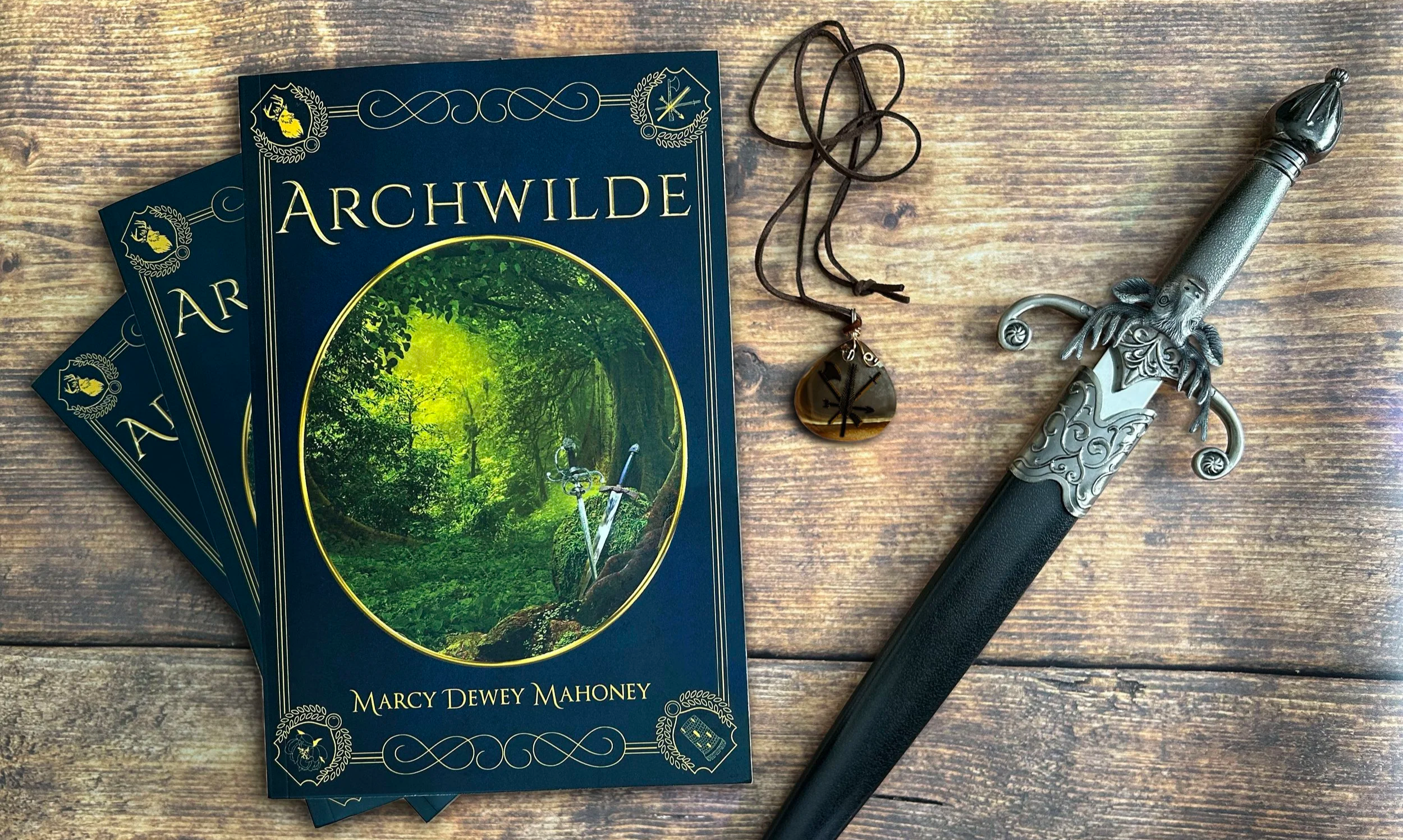
Today I’m revealing the cover design for Archwilde! Ta-da!
This beautiful cover was designed by the immensely talented @TheTypinPint! He did an amazing job of taking the amorphous vision I had in my mind and bringing it to reality. I love the two swords in the forest, framed within this beckoning portal—a window into a different world. It’s all surrounded by the crests of the main players in the book, and the gilding of the word “Archwilde” practically sparkles for being a 2D image! Bryan really hit it out of the park with this design, and I couldn’t be more thrilled!
Until recently, I’ve never really had a clear idea of what the cover should be. I had some ideas over the years for characters in different scenes or poses on the cover—though almost always it was in the forest, so I knew that the forest would be an important element of it. But with these last few of drafts of the book I realized I didn’t want to show characters on the cover after all.
Here’s why:
Have you ever read a book with a character on the cover and thought, as you read the book, that the picture on the cover does not do justice to the image in your head as you read? That happens to me all the time—especially with fantasy books. I much prefer the images that my mind conjures up. But more importantly, I wanted readers to be able to see the characters as they want to see them, and to see themselves in any character that they feel drawn to or identify with, and not have some arbitrary face or race on the cover telling them what the character looks like. Yes, I do describe some characters in my book as being fair, or warmer-skinned, but for the most part I stick just to hair and eye color and try to leave it at that. It’s a world with magic and ogres and glamouries—there’s no reason one hair color or eye color has to go with any specific skin color. That’s the beauty of writing fantasy!
I tried to consciously use phrases like “(the character’s) cheeks warmed” or “color rose in (the character’s) face” to show that it’s not white skin with a blush, unless otherwise stated. Some characters are described as ‘reddening’ or ‘flushing with anger,’ but most of them tend to be rich, older mysoginstic types. Because patriarchy.
I also tried to omit common cliché phrases like “white-knuckled” that would imply a character’s race. Some of these things are so deeply engrained in our vernacular that, being a cisgender white woman, I hadn’t even fully noticed many of them until I really started doing the work to deconstruct these things. It’s a constant, ongoing learning, and I’m committed to doing this vitally important work. I’m also committed to doing the same for gender identity and LGBTQ+ characters. And there are probably things I missed when working on this book, but I will continue to learn and to make sure my writing reflects that effort as I craft future stories.
I know how my characters look in my mind. I don’t know how my characters look in the minds of my readers, and that’s fantastic! I want everyone to see what they want to. I am extremely reluctant to say how I picture my characters for that reason, or to share my version of a “cast” of particular actors. Well, except one character … I just can’t see anyone as Zane other than Jason Momoa. Wouldn’t you just love to see him as a loveable wandering wizard?
The Origins of Archwilde
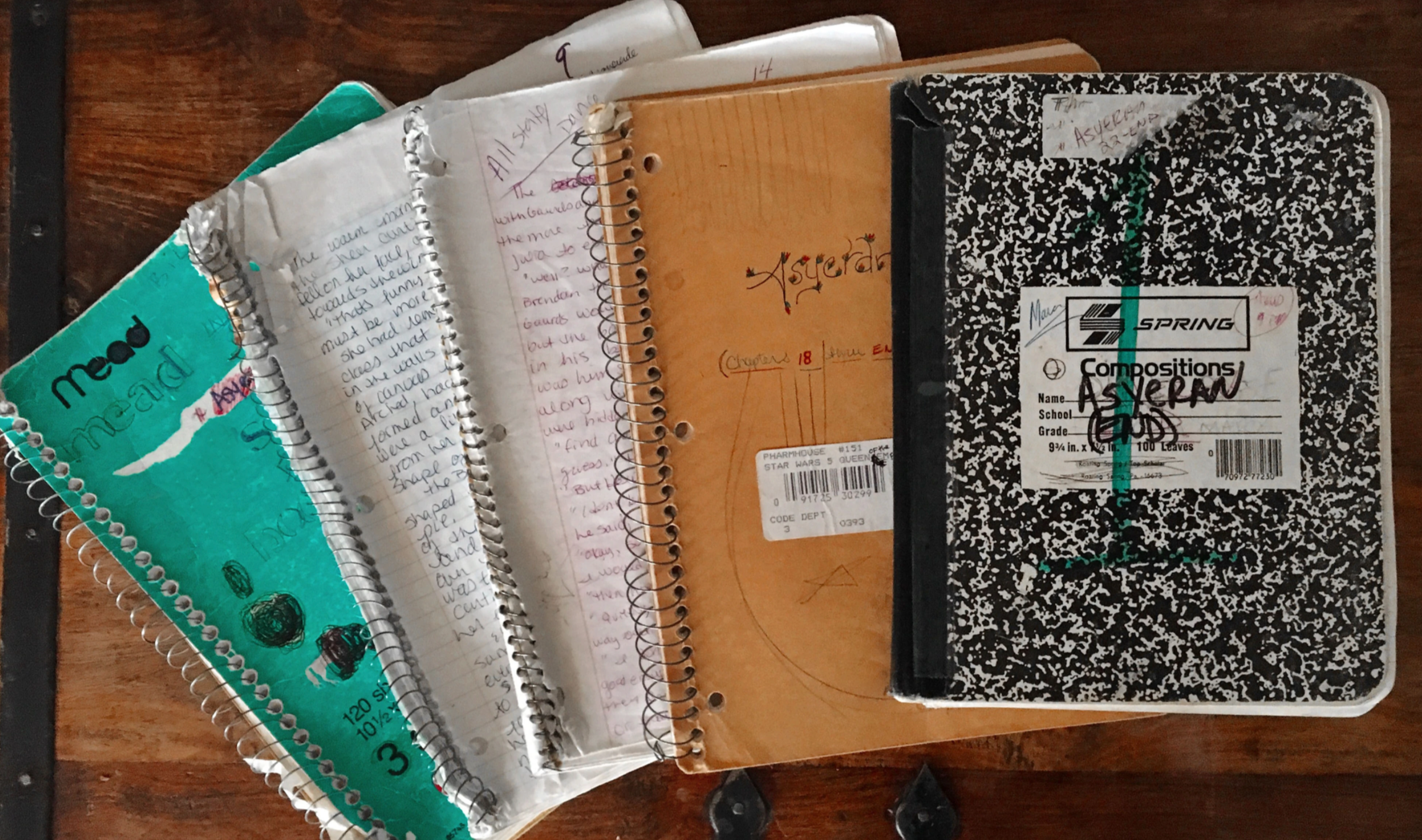
I am feeling nostalgic about the journey this book has taken to come to fruition. I wrote the first draft of it while I was in high school, in spiral-bound notebooks and purple pen ink. It has been through many versions and rewrites since those days, but the spirit of the story has stayed the same. I set out to write a story that I wanted to read.